Truck Body Types: How to Choose the Right Vehicle for Your Cargo
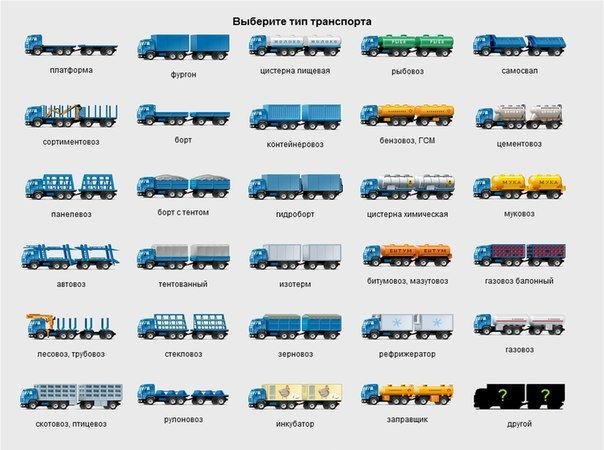
Choosing the body type is the first and most expensive decision in any shipment. Get it wrong and you either overpay or receive damaged goods. Below are all the main types, what they can actually do, and a simple logic for choosing.
Why it matters
Three things depend on the body:
- Cargo protection — weather, temperature, dust, mechanical damage.
- Loading access — from the side, top, rear, by tail lift or crane.
- Price — for the same 5 tonnes, a reefer can cost 40% more than a curtainside.
The main types
Curtainside (tarpaulin)
The most common type: a steel frame covered with reinforced tarpaulin. Protects against rain, sun and dust.
Advantage: loading from three sides — top, side and rear. Critical for palletised freight and crane loading.
Suited for: general commercial cargo, pallets, boxes, furniture, packaged building materials, clothing, appliances.
Limitation: no insulation and no protection against cutting. A real risk for high-value goods.
Box van (rigid body)
An enclosed metal or composite structure. More secure against theft and weather, but loading is rear-only.
Suited for: electronics, high-value goods, documents, pharmaceuticals without temperature requirements, urban delivery.
Limitation: no side loading, and long items are awkward to work in.
Insulated (isothermal)
The same box van, but with insulated walls. There is no refrigeration unit — it only holds the starting temperature for a limited time.
Suited for: short routes with temperature-sensitive goods — confectionery, bread, canned goods in freezing weather, cosmetics.
Important: an insulated body does not cool. Load it warm and it arrives warm. For a two-hour Yerevan — Gyumri run this is often enough; for a full day it is not.
Refrigerated (reefer)
An insulated body with a refrigeration unit. Holds a set temperature, typically from −20 °C to +12 °C.
Suited for: meat, fish, dairy, frozen goods, flowers, pharmaceuticals, vaccines.
Limitation: the most expensive option — fuel for the unit and costly servicing. When booking, always state the required temperature and confirm the vehicle can hold it.
Flatbed
An open platform with drop sides. Loading from any side and from above by crane.
Suited for: steel, pipes, reinforced concrete, machinery, containers, timber — anything that tolerates weather.
Limitation: cargo is exposed to rain and theft and requires strapping.
Tipper
A body with hydraulic lift for self-discharge.
Suited for: sand, gravel, soil, construction waste, asphalt, grain — anything loose.
Limitation: bulk material only; unsuitable for individual items.
Long-load carrier (low-loader, trailer)
An extended platform for cargo over 13.6 metres, often with a lowered deck.
Suited for: structural elements, beams, excavators, tractors, oversized equipment.
Important: moving out-of-gauge loads requires a permit and sometimes an escort. Clarify this in advance.
Tanker
For liquid and gaseous cargo: fuel, milk, water, chemicals. Highly specialised and not convertible to other cargo.
Cargo van (light truck)
An enclosed van on a passenger chassis, up to 1–1.5 tonnes.
Suited for: parcels, small orders, one or two pieces of furniture, urban and short intercity deliveries.
Quick selection table
| Cargo | Body type |
|---|---|
| Pallets, boxes, general goods | Curtainside |
| Furniture, appliances | Curtainside or box van |
| Electronics, high-value goods | Box van |
| Frozen goods, meat, fish | Reefer |
| Confectionery, short run | Insulated |
| Steel, pipes, machinery | Flatbed |
| Sand, gravel, site waste | Tipper |
| Excavators, structures | Long-load / low-loader |
| Fuel, liquids | Tanker |
| 2–3 boxes, a parcel | Cargo van |
Three common mistakes
1. Booking a reefer where insulated would do. For a two-hour run with confectionery, the refrigeration unit is often unnecessary. Saving: 25–40%.
2. Booking a curtainside for crane loading without checking. Not every curtainside opens from the top. Ask the driver directly: "does the roof open?" — a specific question gets a specific answer.
3. Not measuring the load. "It should fit" is the most expensive phrase in logistics. Measure length, width, height and weight before booking.
How to specify the body type in a listing
When posting a listing, state not just the body type but also:
- actual dimensions and weight of the cargo;
- loading method: top, side or rear;
- temperature range, if required, in specific figures;
- whether loaders are needed;
- address constraints: narrow courtyard, low archway, upper floor without a lift.
The more precise the description, the fewer disputes on site and the more realistic the quoted prices.
On Busy Track, body type is a dedicated field both when creating a listing and in the filter. Carriers see only the listings that match their vehicle, and you see only the offers that match your cargo.
Key points
- Curtainside is the default choice for most freight.
- Insulated holds a temperature; a reefer creates one.
- Flatbed is for anything weather-tolerant that loads by crane.
- Measure dimensions and weight before booking, not at the loading dock.