How to Prepare Palletized Cargo for Transportation
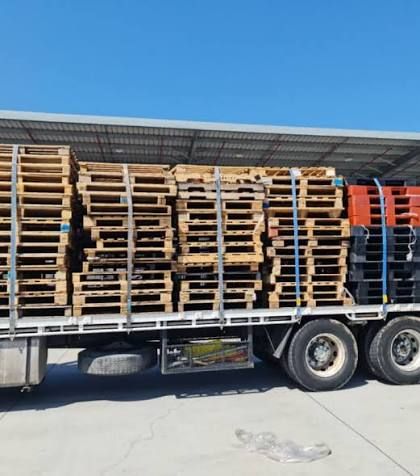
How to Prepare Palletized Cargo for Transportation
Palletizing turns multiple boxes or individual products into a single, manageable cargo unit. This makes warehouse handling, commercial delivery and truck loading more efficient.
A pallet by itself, however, does not guarantee that the shipment will remain safe. Poor weight distribution, unstable stacking or insufficient wrapping can cause the cargo to shift during transportation.
What Can Be Shipped on Pallets
Pallet transportation is commonly used for:
retail products packaged goods food products household supplies construction materials electronics equipment tools warehouse inventory manufacturing components agricultural products boxed shipments
The pallet type should match the weight and dimensions of the shipment.
Start With a Strong Pallet
Inspect the pallet before placing any cargo on it.
A wooden pallet with broken boards, cracks or loose sections may not support a heavy shipment properly. Plastic pallets should also be checked for damage or deformation.
Heavy cargo requires a pallet with an appropriate load rating.
Distribute the Weight
Cargo should be spread across the pallet rather than concentrated in one area.
Heavier boxes are generally placed toward the bottom, with lighter products higher up. A balanced base creates a more stable load.
Avoid allowing large amounts of cargo to extend beyond the pallet edges because exposed sections can be damaged during handling.
Keep the Load Stable
A very tall pallet can become unstable, particularly when the load is narrow or uneven.
If a shipment cannot be stacked safely on one pallet, dividing it between two or more pallets may be a better option. A slightly larger number of stable pallets can be easier and safer to handle.
Wrap the Shipment
Stretch wrap is commonly used to hold boxes together.
The wrapping should cover the main body of the shipment and connect the cargo securely to the pallet where appropriate. Additional protective material may be needed for fragile goods.
The purpose is to prevent individual boxes from moving independently.
Add Strapping When Necessary
Heavy or unusual cargo may need more than stretch film.
Strapping can provide additional stability for dense shipments, long items and heavy boxes. The straps should hold the load firmly without crushing the packaging.
The appropriate securing method depends on the cargo type.
Protect the Corners
Box corners can easily be damaged during warehouse handling or loading.
Corner protectors can reduce pressure on the edges and provide additional support under straps. They are especially useful for stacked cardboard boxes.
Label the Pallet
Special handling information should be clearly visible.
Depending on the cargo, labels may indicate that the shipment is fragile, which side must remain upright or that additional weight should not be placed on top.
Numbering multiple pallets can also make receiving and inventory checks easier.
Measure the Finished Pallet
Before arranging cargo delivery, record the approximate:
length width height weight number of pallets
This information helps determine the appropriate truck and loading arrangement.
Weight is particularly important for dense materials such as cement, metal products and other construction supplies.
Loading Pallets Into the Truck
Pallets should be arranged so they remain stable during transportation.
The loading plan should account for available floor space and overall weight distribution. Several heavy pallets should not be concentrated in one section of the truck without considering the vehicle's load balance.
Additional securing may be required depending on the cargo.
Loading and Unloading
One of the main advantages of palletized cargo is that the entire unit can be moved efficiently when suitable handling equipment is available.
If the pickup or delivery location does not have the necessary equipment, this should be known before transportation begins. Manual loading or unloading assistance may then be required.
Final Pallet Checklist
Before the truck arrives, check that:
the pallet is in good condition boxes are stable heavy items are positioned lower cargo does not dangerously extend beyond the pallet stretch wrap has been applied additional straps are used when needed fragile products have extra protection weight and dimensions are known handling labels are visible Arrange Pallet Transportation
When booking cargo transportation, provide the number of pallets, approximate weight and dimensions.
Pickup and delivery addresses are also required. If the shipment contains fragile, heavy or unusually shaped cargo, provide those details in advance so the appropriate truck and loading method can be selected.